Why Ceiling Fans Wobble (and When Replacement Is Safer Than Repair)
There’s nothing like a ceiling fan to keep your Florida home comfortable during the long, humid months. At Doctor Electric , we hear from homeowners all over Pinellas County whose fans start making noise or shaking out of nowhere. While a slight wobble isn’t uncommon, ignoring more obvious movements can lead to bigger safety issues.
A wobbly fan is rarely just an annoyance—it can be a warning that something’s wrong with your home’s wiring or mounting setup. Here’s where Doctor Electric’s expertise comes in: We’ll explain exactly why ceiling fans wobble, when it can be fixed, and when a replacement is the smarter, safer choice for Florida residents.
What We Cover:
- Unbalanced Blades and Installation Faults
- Wear, Tear, and Local Florida Conditions
- When Repair Makes Sense—And When It Doesn't
- Why DIY Repairs Often Make Matters Worse
- Spotting Wobble Early: Takeaway
Unbalanced Blades and Installation Faults
In most Pinellas County homes, ceiling fans start wobbling because of two primary causes: unbalanced blades or poor installation. Even high-end fans can show movement if the blades pick up minor warps, or if the mounting bracket isn’t fully secure. This is a common issue in Florida homes, especially those with settling ceilings after years of humidity and temperature changes. Doctor Electric often finds that older fans, or those installed by a less experienced hand, are the first to develop these problems.
If your fan starts to wobble soon after installation, it’s usually a clue that blades weren’t matched properly or the junction box isn’t rated for ceiling fans. In Florida, the added stress from running fans almost year-round can make these tiny imbalances much worse over time.
→ A quick tip to remember: Any movement greater than a gentle sway, or a visible tilt in the fan's housing, means you should have a professional inspect both the blades and how the fan was mounted.
Wear, Tear, and Local Florida Conditions
Humidity, salty air, and dust are all part of daily life in Florida—and they all contribute to fan problems. Over time, metal mounting hardware and internal bearings can corrode or wear out, creating uneven rotation and extra noise. If your fan is more than five years old and hasn’t had a checkup, the chances of hardware wear go up every year.
In Pinellas County, we also see fans installed in outdoor or semi-outdoor spaces wear out quicker than indoor fans. When screw fittings rust or bearing lubrication dries up, even a balanced fan can begin to wobble or fail abruptly.
→ From a professional standpoint: Fans exposed to constant Florida humidity need periodic tightening and lubrication. Ignoring this step shortens their lifespan and increases the risk of breakdown.
When Repair Makes Sense—And When It Doesn't
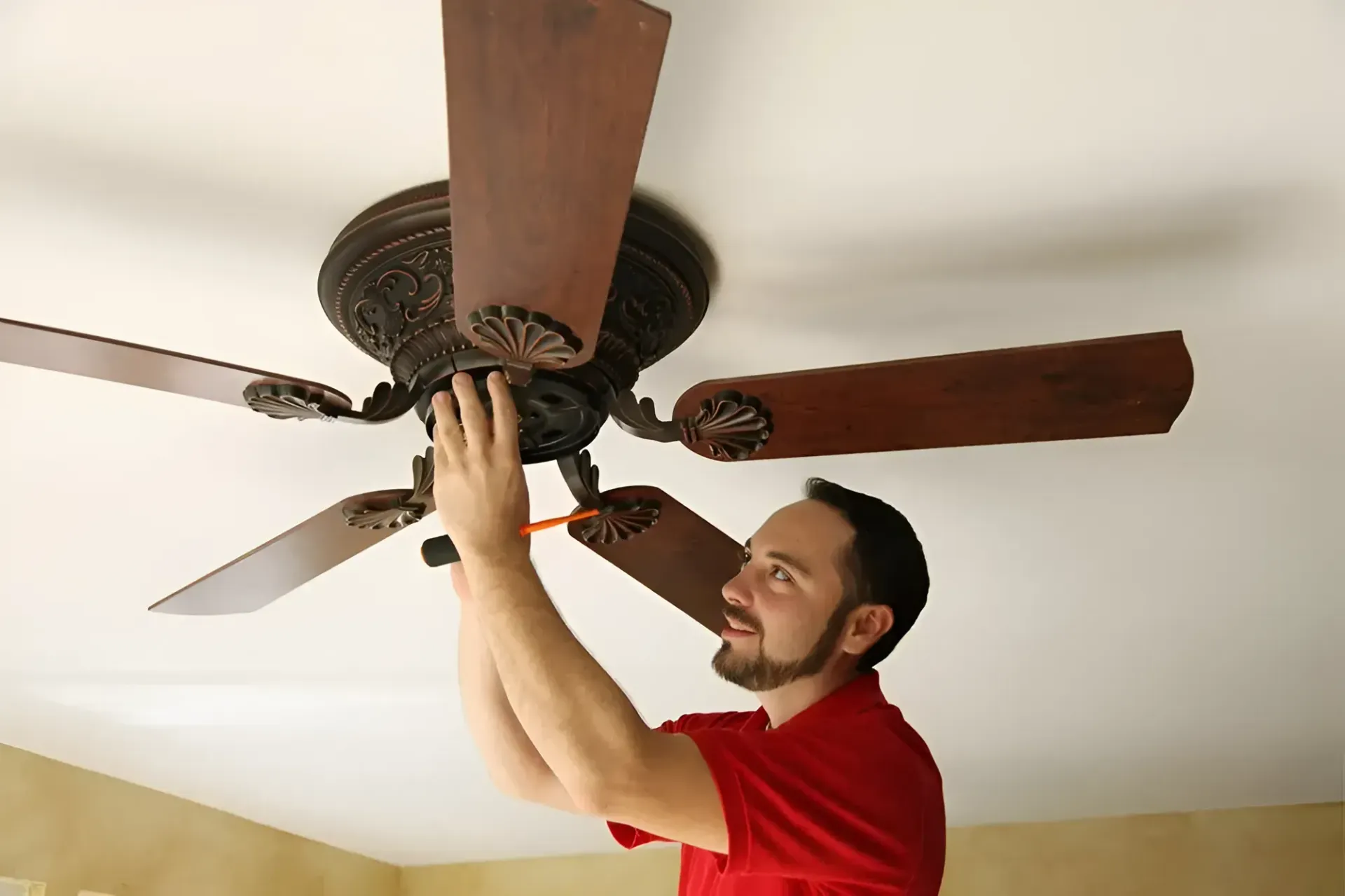
There are times when a wobbling fan can be put right with simple fixes: balancing the blades, retightening screws, or swapping out a worn mounting bracket. Doctor Electric often saves homeowners money with these quick repairs, but sometimes, a replacement is the only safe move.
If your fan has visible cracks, severe rust, or movement that persists after blade balancing, it’s not worth patching up. Fans installed decades ago or lacking modern safety ratings are better replaced, especially in Florida’s harsh environment.
Why DIY Repairs Often Make Matters Worse
Many Florida homeowners try to fix a wobbly ceiling fan themselves, hoping to save time or money. The trouble comes when tightening the wrong screws, overbalancing blades, or ignoring mounting issues leads to more damage, or in rare cases, causes the fixture to loosen from the ceiling.
Sometimes the fan’s wiring was never properly secured, and moving things around without knowing what’s behind the cover adds real hazard. An experienced trade professional from Doctor Electric looks beyond just the obvious wobble, checking connections and mounts you can’t see until you open things up the right way.
→ A quick tip to remember: Save yourself unnecessary risk—if you’re unsure about anything beyond simple dusting or gently tightening a blade, call a pro.
Spotting Wobble Early: Takeaway
Many ceiling fan problems in Florida can be traced back to environment, age, or shortcuts taken during installation. If you catch small issues early and use a licensed electrician for anything related to wiring or mounting, you’ll avoid the stress and risk that comes with worsening wobbles.
Doctor Electric sees the results of rushed DIY fixes every month in Pinellas County. Life’s easier—and safer—when you have a professional diagnose and fix your ceiling fans for good.
Share This Blog